Václav Havel Human Rights Prize 2013

The Laureate of the Václav Havel Human Rights Prize 2013
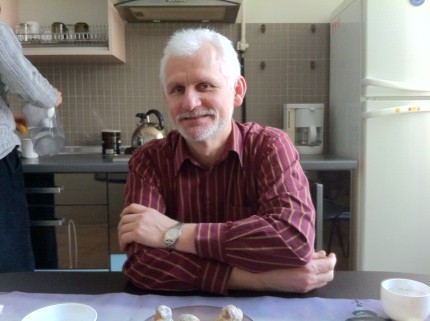
This year's laureate of the Vaclav Havel Human Rights Prize is Belarusian writer, Ales Bialiatski.
The Belarusian writer Ales Bialiatski has been involved in the national democratic movement since the early 1980s. Later, he organized the first demonstrations against totalitarianism. This activity resulted in his imprisonment in 1988, the beginning of a long series of arrests and intimidation. In 2021, Bialiatski was awarded the Nobel Peace Prize. On July 14, 2021, the Belarusian police raided the headquarters of several NGOs and the homes of their leaders, and several of them were arrested; some of them were released after a few days, but not Ales Bialiatski, who was imprisoned until December 2025.
Three Candidates Shortlisted for the Prize
Ales Bialiatski (Belarus)
From the start of the 1980s, Ales Bialiatski, a young Belarusian writer and graduate of the Gomel University Faculty of History and Philology, joined the national democratic movement. While the world was still divided by the Iron Curtain, he became a founding member of the Belarusian Popular Front. Helping to create a young writers’ association that he chaired for several years, Ales went on to join the Belarusian Writers’ Union. Later, he organised the first demonstrations against totalitarianism. This commitment led to his imprisonment in 1988, marking the start of a long series of arrests and harassment. In 1996, in the face of the increasing repression of the Lukachenko regime, Ales Bialiatski created the Human Rights Centre Viasna. In 2007, just three years after joining International Federation for Human Rights (FIDH), Ales Bialiatski was elected its Vice-President, the first representative of the former Soviet countries to be elected to the FIDH International Board.
Georgian Young Lawyers’ Association (Georgia)
Georgian Young Lawyers’ Association has been conducting human rights protection activities since 1994. Their activities are focused on the following strategic fields: Legal aid – Legal aid center of GYLA in Tbilisi and seven regions of Georgia provides legal assistance to tens of thousands of citizens (consultation, preparation of legal documents, and court representation in case of need). Special attention is paid to the facts where human rights are violated by the government or an administrative body. Vulnerable groups – GYLA pays special attention to the protection of the rights of religious, ethnic, sexual minorities, people with limited abilities, and those who live beyond the poverty line. Prisoners’ rights – GYLA is actively involved in monitoring of penitentiary systems. Special attention is paid to facts of torture and mistreatment.Participation in legal drafting – GYLA conducts constant monitoring of the legislative process and prepares its own legal opinions on every draft, which is important for human rights. Raising awareness – There are many people in Georgia who have no information about their rights – GYLA’s offices in the regions have been implementing campaigns for raising awareness throughout Georgia (trainings, seminars, and field meetings to ensure awareness of local groups and support their democratic involvement in the country’s political and social life). Strategic litigation – first, denunciation of discriminative legal acts, or acts, which violate human rights through trial at the constitutional court of Georgia, and the second, representation of Georgian citizens at the European Court of Human Rights. Protection of Media Interests – on the basis of GYLA, the Media Legal Defense Center, which ensures the protection of the rights and interests of different media sources and journalists.
Rights Defence Network (China)
Launched in China in 2005, the Rights Defense Network (wei quan wang, WQW) has been the most active and effective human rights group to operate inside the country ever since. The group, which cannot be legally registered with the government because the government disapproves of it, is composed of activists, lawyers, journalists, writers, dissidents, and labor organizers who maintain loose association in physical space and use the Internet as their main tool for collecting, sharing, and disseminating information, organizing actions, and pursuing advocacy. The Network has played a vital role in monitoring, updating, and providing in-depth analyses of the rights situation inside China. It informs the public inside the country as well as the Chinese-language media overseas and the international community.